Rowan’s Law & Concussion Safety
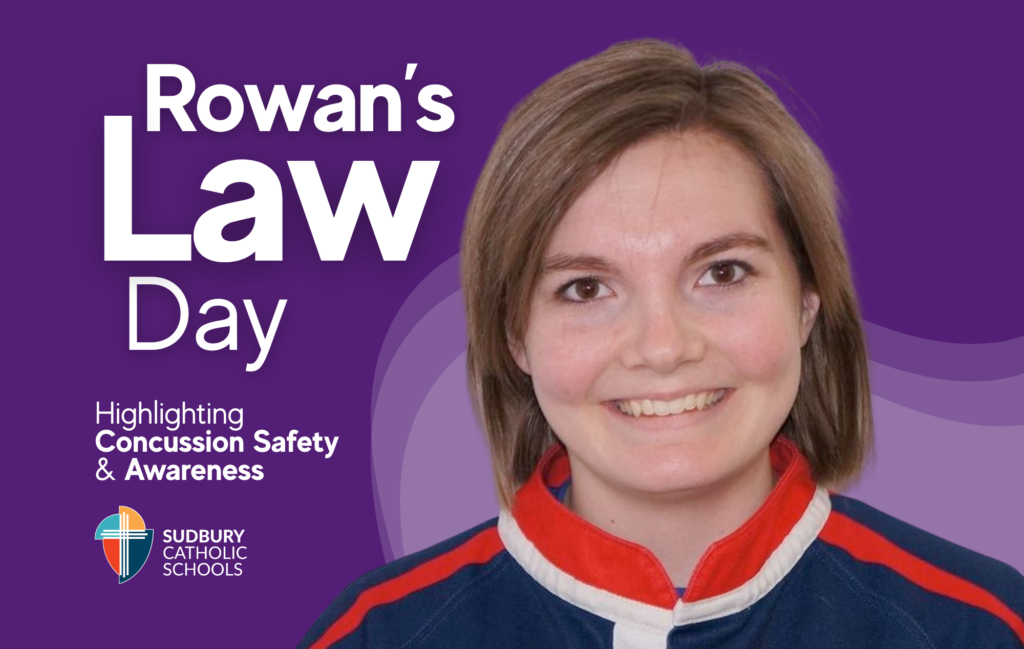
The start of a new school year also marks the return of school sports, clubs and other activities. Whether students participate in team sports, physical education, dance, performing arts or recreational activities, their safety and well-being remain our priority.
Rowan’s Law Day
Monday, September 28, 2026
On Monday, September 28, 2026, the Sudbury Catholic District School Board will recognize Rowan’s Law Day, joining communities across Ontario in raising awareness about concussions and the importance of responding safely.
Rowan’s Law Day Poster
Signs of a Concussion Poster
Hit. Stop. Sit.
Concussion Safety & Awareness Resources
Check out the following information and resources to learn the signs of a concussion, speak up and know how to respond. Together, we can increase awareness and help protect the health and well-being of every student.
Who Was Rowan?
Rowan Stringer was 17 years old when she died from a condition known as second impact syndrome. While playing rugby, Rowan is believed to have experienced three concussions over six days. She didn’t know her brain needed time to heal. Neither did her parents, teachers or coaches.
Rowan’s Law and Rowan’s Law Day honour Rowan’s memory and aim to bring awareness to concussions and concussion safety. This year, Rowan’s Law Day falls on September 30, which is also the National Day for Truth and Reconciliation. Sudbury Catholic Schools will therefore recognize Rowan’s Law Day on Monday, September 28.

Hit. Stop. Sit.
HIT: A concussion can result from a hit to the head, neck or body. It can affect how a person thinks, feels and acts. A person does not need to lose consciousness to have a concussion, and symptoms may not appear immediately.
STOP: If you think a student or athlete may have sustained a concussion, stop the activity immediately and seek help. Students with a suspected concussion should be assessed by a physician or nurse practitioner.
SIT: A student with a suspected concussion must sit out of sports and activities where another injury could occur. They should not return to physical activity that day and must follow the appropriate return-to-school and return-to-activity steps.
When in doubt, sit them out.
Recognizing a Possible Concussion
Signs and symptoms of a concussion can be physical, cognitive, emotional, behavioural or related to sleep. They may include:
- Headache, dizziness or balance problems
- Nausea or vomiting
- Blurred or double vision
- Sensitivity to light or sound
- Difficulty concentrating or remembering
- Confusion or appearing dazed
- Irritability, sadness or unusual emotions
- Changes in sleep or energy levels
If a student experiences severe or worsening symptoms, including loss of consciousness, repeated vomiting, seizures, increasing confusion, slurred speech, severe headache or neck pain, call 911 immediately.
To learn more, view the following resource: Rowan's Law - Signs of a Concussion Poster
Ontario’s Rowan’s Law and Concussion Safety Resources
Concussion Awareness Digital Resource Card
Ontario Concussion Awareness Videos
Concussion Awareness Resource for Ages 10 and Under
Concussion Awareness Resource for Ages 11 to 14
Concussion Awareness Resource for Ages 15 and Up
Ontario Government Concussion Awareness Resource E-Module
Sudbury CDSB Concussion Protocol
Staff members, coaches and volunteers do not diagnose concussions. However, we all share a responsibility to recognize and report possible signs and symptoms, remove students safely from activities and ensure they receive appropriate medical attention. Following a concussion, students may require temporary adjustments and support as they gradually return to learning and physical activity. Open communication among the student, family, school and healthcare team is essential to supporting a safe recovery.
View our complete Concussion Protocol and applicable forms below: